
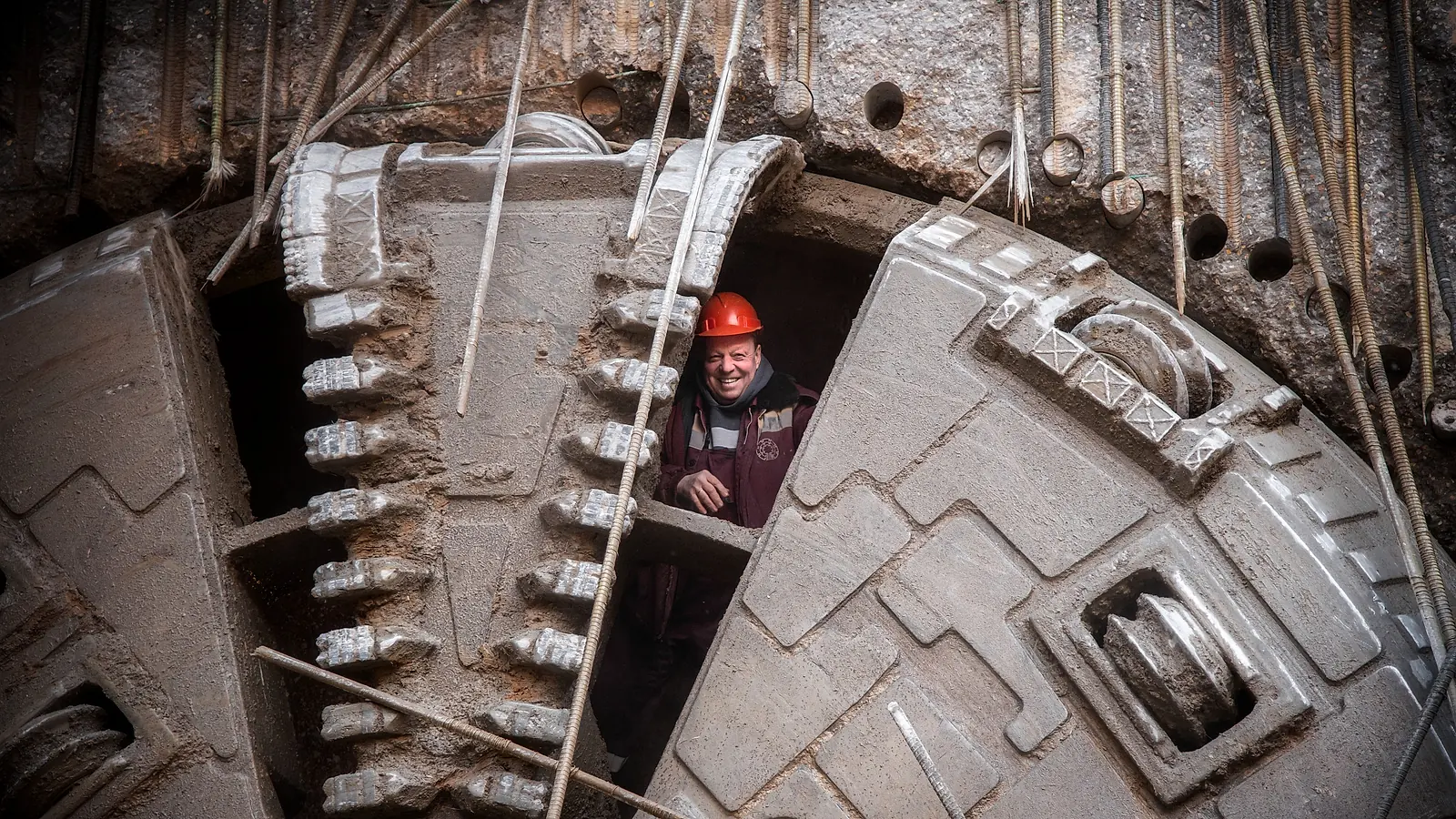

In 1997, China faced a major technological challenge.
The country was rapidly expanding its metro and railway networks, but there was one big problem: China didn’t have the technology to manufacture advanced tunnel boring machines.
After searching internationally, the Chinese eventually found what they needed in Germany.
Two second-hand tunnel boring machines.
The asking price? 700 million yuan.
China had little bargaining power. It paid the money, purchased the machines and shipped them home.
But buying the machines was only the beginning.
German engineers had to travel to China to install and operate them. Their daily fee was reportedly 800 euros per engineer.
At a time when an ordinary Chinese worker earned less than 4,000 yuan annually, the cost of hiring a single German engineer for one day was enormous.
The real problem: dependence
But the financial burden wasn’t China’s biggest problem.
The real problem was technological dependence.
The machines belonged to China, but the technology didn’t.
If something broke, China needed German engineers. If a component needed replacing, China had to purchase it from Germany. If technical assistance was required, the Germans had to be called.
China was essentially paying for access to technology it couldn’t manufacture itself.
And Beijing didn’t want that situation to continue.
Building its own machines
In 2002, China began a determined effort to develop its own tunnel boring machines.
It was an enormous engineering challenge.
A single machine contained tens of thousands of precision components. Engineers had to master everything from massive cutter heads and hydraulic systems to sophisticated electronic controls.
It took years of research, experimentation and engineering development.
By 2008, China had reportedly produced its first domestically developed tunnel boring machine.
But building one wasn’t enough. It had to prove that it could compete with the best machines in the world.
China continued improving its technology, testing its machines and competing with established international manufacturers.
From home projects to world markets
Then came the next phase: industrial expansion.
First, China developed the technology for its domestic infrastructure projects. Then it expanded production, improved efficiency, reduced manufacturing costs and began competing internationally.
Today, Chinese manufacturers are among the world’s dominant producers of tunnel boring machines, supplying major infrastructure projects across multiple continents.
The pattern behind China’s industrial rise
And this story reveals something important about China’s broader industrial strategy.
Look at what China has done in electric vehicles, batteries, solar panels, drones and advanced robotics.
The pattern is remarkably similar:
- Identify a technology the country depends on foreign suppliers to obtain.
- Acquire the technology and study how it works.
- Invest heavily in domestic research and development.
- Develop indigenous alternatives.
- Scale up production and reduce costs.
- Compete for global market dominance.
China’s ambition isn’t simply to purchase advanced technology. It wants the ability to manufacture, improve and eventually export that technology.
The country that once depended on Germany for two second-hand tunnel boring machines has become a major force in the global tunnelling industry.
The bigger lesson
That is the bigger lesson.
Industrial power isn’t built simply by buying what other countries manufacture. It is built by developing the knowledge, technology, infrastructure and manufacturing capacity to produce those things yourself.
China’s two second-hand German machines weren’t just equipment purchases. They became a symbol of a much bigger ambition: moving from technological dependence to industrial independence.
Sourcing industrial machinery or equipment from China? See our Trade and Industrial services or book a consultation.